Trump Loses His Wingman
The Atlantic · LC · trust 51/100
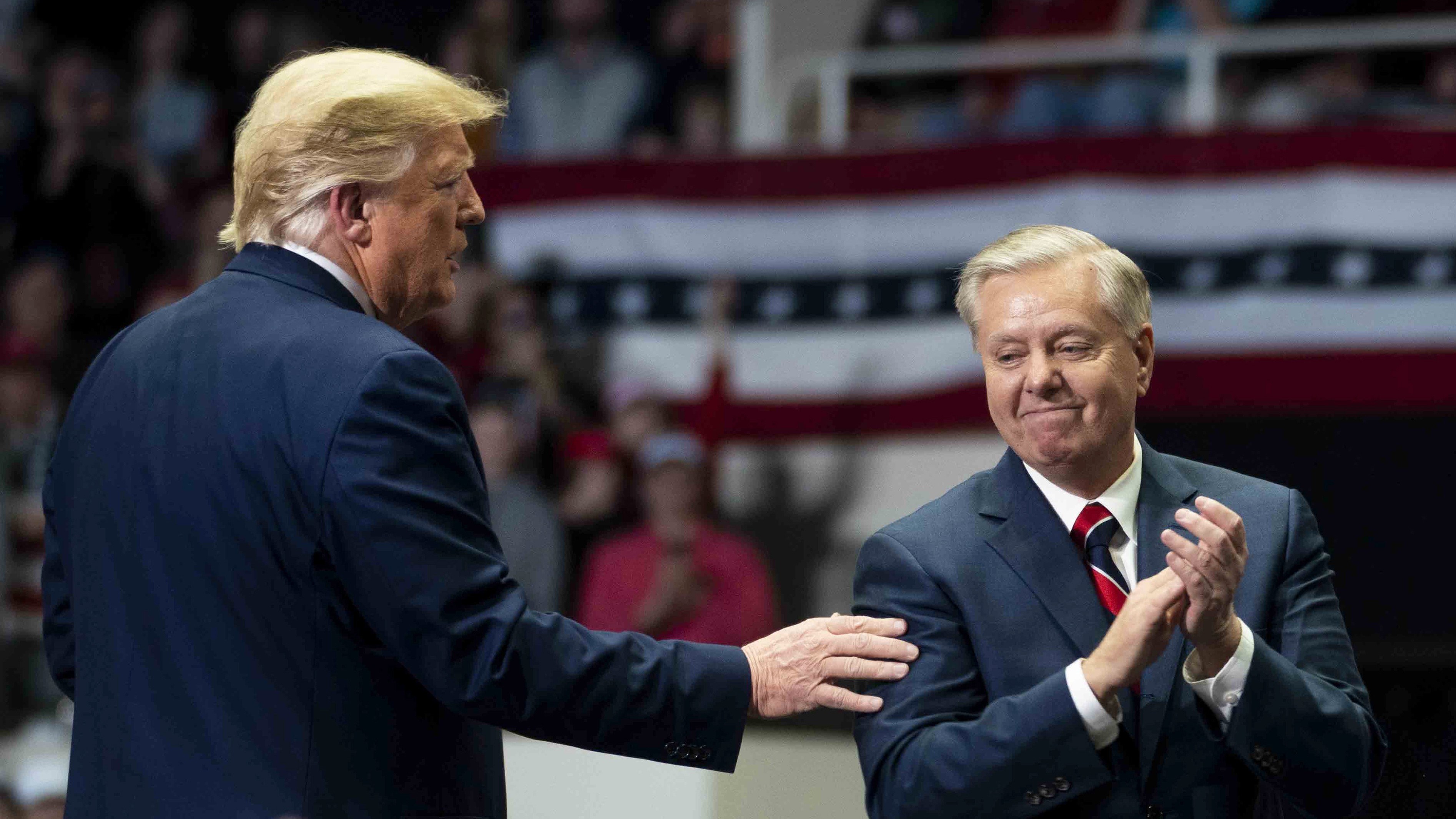
Lindsey Graham’s sudden death leaves a void that the White House can’t afford.
Doug Mills / The New York Times / Redux July 12, 2026 Share Save L indsey Graham had just returned from a trip to Ukraine last night when he called President Trump to talk with him—about the trip, about one of the president’s key legislative priorities, about the days ahead. The two spoke often on their cellphones, a reminder of how their relationship had warmed in the decade since Trump, in a fit of pique after Graham called him a “jackass,” read the South Carolina senator’s personal cellphone number aloud at a campaign event.
“He was full of vim and vigor,” Trump recalled on CNN this morning. “He was tired. He said, ‘I’m tired because it’s a long trip.’ But other than that, he was fine.” Not long after the call, as a result of what his office said was “a brief and sudden illness,” Graham was dead.
Trump at 3:21 a.m. posted on social media that Graham was “one of the greatest people and Senators I have ever known.” By morning, the flags were lowered to half-staff at the White House, the political jockeying for his replacement had begun in South Carolina, and Trump and his aides were openly mourning the loss of a close personal friend and ardent political ally.
Graham had told Trump last night that in the morning he was going to appear on NBC’s Meet the Press for what would have been his 64th time. Trump joined instead. “He’s a tough one to lose. He was great. He was unique in every way, actually,” he said . Trump recounted his reaction when a Graham staffer passed along the news at about one in the morning: “I said, ‘I just can’t believe it. He was like a member of the family to me.’ It’s very tough, actually.”
Graham’s death has thrown into question the path forward on a number of Trump priorities, including a new reconciliation bill—which could contain portions of his SAVE America Act on voting—as well as the looming confirmation battle over attorney-general nominee Todd Blanche. Trump’s relations with GOP senators have been rocky , to say the least, and Graham was a crucial conciliator who often mediated between the White House and Capitol Hill. The absence of Senator Mitch McConnell, who was hospitalized last month with no indication of when he might return, further narrows the margins for Senate Republicans.
McConnell’s illness and Graham’s death represent twin blows for the pro-Ukrainian wing of the party, which had been heartened by Trump’s recent show of support for President Volodymyr Zelensky and sees Russia as being on its back foot in the war. Graham had been a reliable supporter of Ukraine—one of his last public appearances was a meeting with Zelensky on Friday —and he said from Kyiv that Trump had been persuaded to bless his long-stalled Russian sanctions bill.
Graham’s death was another shock to a West Wing that has grown accustomed to brushes with mortality. Aides were not as close to Graham as they were to the slain right-wing activist Charlie Kirk, but the senator had become a familiar, affable presence in Trump’s orbit and many had grown fond of him. “America has lost a Statesman. President Trump and the White House have lost a friend,” White House Press Secretary Karoline Leavitt wrote . Vice President Vance recalled getting into a shouting match with him over Ukraine funding one day, then trying to align with him on rail legislation the next: “He fought like hell for the things he believed in, and he was just as willing to go to bat for you when it counted.”
“Meetings with Graham at the White House were filled with camaraderie, kinship and uproarious laughter,” Stephen Miller wrote in a lengthy social-media post . “In many respects, Lindsey was the last of a breed of American Senator whose like we may not yet see again for a long time. He lived every minute in the arena, a political gladiator to the very last.”
There was also immediate concern as to who might follow Graham into the South Carolina Senate seat; the appointment of any House Republican would further erode the party’s slim advantage in the lower chamber, and the White House in particular opposes Nancy Mace, the once–close ally turned frequent Trump critic who performed poorly in her recent run for governor. (Mace has reportedly expressed interest in the seat.)
Governor Henry McMaster, a staunch Trump ally, will appoint someone to fill the seat until January, and a special Republican primary election will be held next month to pick a nominee. (Graham, who was up for reelection, won his primary last month.) “I have somebody that I think would be great, but I don’t want to say it now because it’s just, you know, it’s too soon with Lindsey,” Trump said on Meet the Press .
G raham did some remarkable shape-shifting to stay close to power, journeying from being one of John McCain’s best friends to one of Trump’s most reflexive advocates. He also forged a close bond with Joe Biden during trips to war zones, and he worked with John Kerry on climate-change legislation. The one consistency was his hawkish view of foreign policy. Even after he cozied up to Trump, he remained tough on Russia and a vocal supporter of Ukraine despite the president’s deference to Vladimir Putin. And, of course, Graham had long advocated attacking Iran and was one of the loudest voices in Washington urging Trump to launch a war that has since turned into a quagmire for the White House.
The veteran senator’s relationship with Trump has been a journey. A decade ago, after years of traveling the world with McCain and Joe Lieberman as the so-called three amigos, Graham opted to make a run for the White House. Always a long shot, his campaign never took off. But Graham was unsparing in his assessment that Trump was unfit for office, tweeting in May 2016 that the party would “get destroyed” if it nominated the first-time candidate, adding that “we will deserve it.” But Graham soon worked to fix his relationship with Trump.
Long a fixture on the…
Read the original at The Atlantic →
Open in TruthVane →